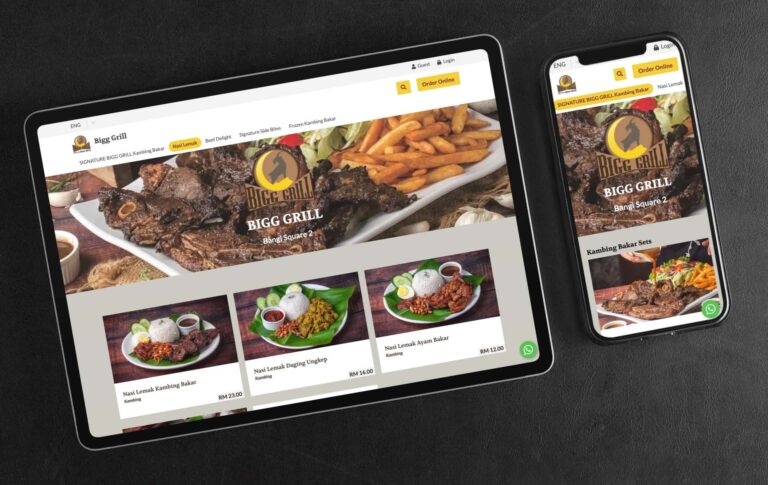
Picture this: You’re a busy nasi lemak stall owner in KL, staring at another 30% commission bite from your Malaysian food delivery platform. Customers love the convenience, but those fees eat your margins alive. The Malaysian food service industry, including Malaysian food delivery platforms, is expected to grow from USD 16.67 billion in 2026 to USD 30.74 billion in 5 years, powering a market worth billions as SMEs fight to thrive.
Key Points:
- Why switch platforms? High fees erode 30% margins; alternatives like FoodVillage restore control amid 13% market growth.
- How to pick? Match coverage to your KL radius—Grab for volume, Beep for savings.
- Why commission-free? Direct orders via software automate everything, boosting net by 30%.
- How manage deliveries? Integrate Lalamove or RMS for real-time tracking without middlemen.
- Future-proof tip: Blend platforms with own software as duopoly shifts.
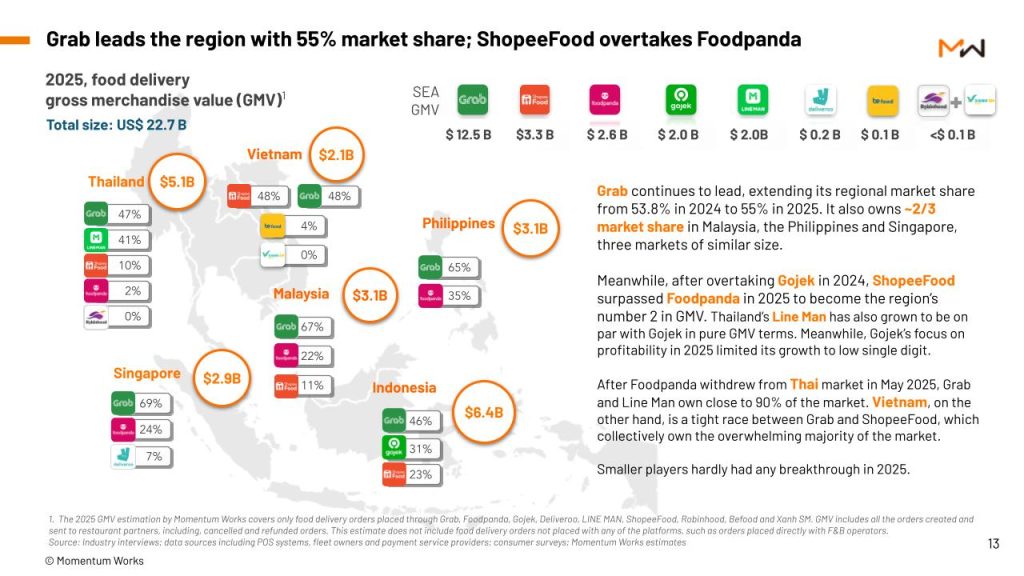
GrabFood dominates with 67% share, followed by Foodpanda at 22% and ShopeeFood at 11%. Key Point: Platforms matter because they drive 55% regional orders, but high commissions (15-35%) squeeze profits—owners switch to hybrids for survival.
Furthermore, SMEs in Klang Valley crave Grab alternatives in Malaysia to cut costs. On the other hand, tech-savvy startups eye restaurant delivery management software for full control.
Platform 1: GrabFood Leads the Pack
Let’s begin by addressing the elephant in the room. GrabFood blankets KL with seamless integration to rides and rewards. Riders swarm peak hours, slashing wait times to 30 minutes in traffic jams.
You pay RM2.50–RM7 delivery fees plus 5-9% service, but commissions hit 30%+. Consequently, many owners feel trapped. Key Point: How GrabFood wins? Its ecosystem loyalty keeps users hooked, but diversify to avoid dependency.
Platform 2: Foodpanda Delivers Reliability
Foodpanda shines with grocery add-ons and a massive rider fleet. It covers urban spots fast, ideal for diverse menus like roti canai or bubble tea.
Fees mirror Grab’s, around RM2.50–RM7, with 15-30% commissions varying by deal. Similarly, promotions lure diners, but restaurants negotiate for lower cuts.
Platform 3: ShopeeFood as Grab Alternative
ShopeeFood emerges as a top Grab alternative in Malaysia, tapping e-commerce crowds for RM2–RM6 fees. It packs deals that pull budget eaters.
Commissions stay at 5-9%, but the real draw? Seamless app flow boosts repeat orders. Key Point: Why choose ShopeeFood? It slashes costs via promotions, helping SMEs compete without Grab’s grip.
Platform 4: Beep Cuts Commissions
Beep, from StoreHub, targets independents with lower fees—no marketplace gouge. Restaurants keep more by direct ordering.
It spans Klang Valley, promising upfront pricing. On the other hand, smaller scale means fewer riders than giants.
Platform 5: FoodVillage Goes Commission-Free
FoodVillage revolutionizes with commission-free food delivery on top-tier plans, helping business owners cap operational costs and scale freely—while lower tiers charge just RM99 monthly with minimal commissions. It integrates Lalamove for automated, accurate routes via Google Maps.
Owners set their rates, dodging 30% traps entirely on premium options. Key Point: How does commission-free work? Top tiers eliminate fees for full profit control; even entry plans at RM99/mo + low commission beat industry averages, powering real scalability.
Explore our article on the power of integrating Facebook pixel in your FoodVillage store.
Frequently Asked Questions:
How does commission-free food delivery work?
How does FoodVillage stack up as a Grab alternative in Malaysia for scaling businesses?
What risks come with relying on one food delivery platform in Malaysia?
Are Malaysian food delivery platforms available 24/7?
GrabFood and Foodpanda operate ~7am-2am (up to 24 hours in parts of KL), but depend on restaurant schedules with post-midnight gaps. FoodVillage stays open 24/7 for “order now” and “order later,” giving SMEs unmatched flexibility and is completely customisable according to each restaurants unique operational nuances.